One of the selling points was the range of apps. I've just bought 'Zombies, Run!' (I know, I'm chasing behind that bandwagon too) and it's pretty fun. It's a basic concept: it's a fitness app with a post-apocalypse game thrown in. If, like me, you have little intrinsic motivation, it can be a great way to get you going. There's nothing like the words "Zombies approaching... Run!" to help you get your sprint on. If you're not up for having to add sudden bursts of speed to your run, you can turn the chase mode off.
So, if you see me running with a blind look of panic, there's probably an undead horde nearby. Just another normal day...

Sunday, 5 October 2014
Can't stop... Zombie hordes
So, I've recently got my first iPhone. I knew this day would come eventually, but I put it off for as long as I could. Finally, I relented and succumbed to the worldly desires that rage within me. My lust for shiny tech has won.

Saturday, 4 October 2014
The Not Quite There
This was a poem I wrote last year to commemorate my first half-term as an NQT teacher. When my mother was shown this, she thought it was written by Michael Rosen. I'm pretty sure it wasn't.
The Not Quite There
The Not Quite There can be seen from a mile,
With deep dark bags and a faltering smile;
And they're clutching at coffee with quivering hands
Whilst frantically looking for long term plans.
What's the first unit? And how long for?
Where are the levels for key stage four?
Who are my EALs, SENs and PPs?
And where is the list of all my tutees?
It's the fourth of September; school has just started,
But comes an announcement that makes them fainthearted.
The office that deals with qualifications
Has waited until the last day of vacation
To tell them the news that ruins their plans.
And behind this news is an odd looking man:
Like a pig in a wig with sticky-out ears,
And a big bulbous head full of silly ideas;
And a big bottom lip and a Thunderbird's chin;
And small beady eyes filled with evil and sin.
So the pig-like man said from his puppet-like jaw,
"The Speaking and Listening shall be no more!
For those poor children whose writing is weak,
But have good ideas when given to speak,
Should be, in my judgement, seen but not heard."
Which, I might add, is quite frankly absurd.
Scrapping work that had been completed?
The poor students would clearly feel cheated!
But teachers then thought of a genius plan,
And entered the kids in November's exam.
This early submission would surely secure
The marks the poor students had done the work for.
So reassured by this hopeful belief,
The teachers all sighed a sigh of relief.
But the pig in the wig with sticky-out ears
And a big bulbous head had other ideas.
With a menacing grin the pigman said
(raising his brows to the top of his head),
"From now on league tables will purely be set
By the first grades the children collect.
Requesting fresh chances is far too bold;
This country has standards that it must uphold!"
The Not Quite There heard the confusing new news,
And waited to see which path they would choose:
Would the poor kids be withdrawn from exams,
Or would the school keep to the original plans?
The staff were all thrown into a blind panic;
The Head was becoming completely frantic.
A Governors' meeting was quickly convened,
To think how to respond to that pigheaded fiend.
The submissions will stay! The exams will be taken!
And, although the staff were considerably shaken,
A decision was made and this cheered them on,
What else at this juncture could go possibly wrong?
The Mocks! That's what could go possibly wrong.
For, when the papers were looked upon,
The grammar was grim and the spelling was dire
The department had found themselves stuck in a mire.
The exam was too soon! Was it too late
To turn the tide? The ask was too great.
Extra sessions were scheduled. Targets were set.
Papers were practiced so they would not forget,
The skills that they needed to pass the exam.
Staff taught the students like battering rams,
Repeating advice, "Use capital letters!
And winsome words to make your work better!
And use an ellipsis and paragraphs too."
The answers improved and confidence grew.
And, although this was good, the work was not done.
Targets were set, extra session were run,
Papers were practiced and then given marks.
This was all quite a formidable task.
The teachers were white-washed, completely expended,
Dead on their feet when the half-term had ended.
Was it enough? Well, we'll just have to wait!
The exam is after they return from their break.
But at least you have been able to see,
What the first eight weeks were like for the poor NQT.
The Not Quite There
The Not Quite There can be seen from a mile,
With deep dark bags and a faltering smile;
And they're clutching at coffee with quivering hands
Whilst frantically looking for long term plans.
What's the first unit? And how long for?
Where are the levels for key stage four?
Who are my EALs, SENs and PPs?
And where is the list of all my tutees?
It's the fourth of September; school has just started,
But comes an announcement that makes them fainthearted.
The office that deals with qualifications
Has waited until the last day of vacation
To tell them the news that ruins their plans.
And behind this news is an odd looking man:
Like a pig in a wig with sticky-out ears,
And a big bulbous head full of silly ideas;
And a big bottom lip and a Thunderbird's chin;
And small beady eyes filled with evil and sin.
So the pig-like man said from his puppet-like jaw,
"The Speaking and Listening shall be no more!
For those poor children whose writing is weak,
But have good ideas when given to speak,
Should be, in my judgement, seen but not heard."
Which, I might add, is quite frankly absurd.
Scrapping work that had been completed?
The poor students would clearly feel cheated!
But teachers then thought of a genius plan,
And entered the kids in November's exam.
This early submission would surely secure
The marks the poor students had done the work for.
So reassured by this hopeful belief,
The teachers all sighed a sigh of relief.
But the pig in the wig with sticky-out ears
And a big bulbous head had other ideas.
With a menacing grin the pigman said
(raising his brows to the top of his head),
"From now on league tables will purely be set
By the first grades the children collect.
Requesting fresh chances is far too bold;
This country has standards that it must uphold!"
The Not Quite There heard the confusing new news,
And waited to see which path they would choose:
Would the poor kids be withdrawn from exams,
Or would the school keep to the original plans?
The staff were all thrown into a blind panic;
The Head was becoming completely frantic.
A Governors' meeting was quickly convened,
To think how to respond to that pigheaded fiend.
The submissions will stay! The exams will be taken!
And, although the staff were considerably shaken,
A decision was made and this cheered them on,
What else at this juncture could go possibly wrong?
The Mocks! That's what could go possibly wrong.
For, when the papers were looked upon,
The grammar was grim and the spelling was dire
The department had found themselves stuck in a mire.
The exam was too soon! Was it too late
To turn the tide? The ask was too great.
Extra sessions were scheduled. Targets were set.
Papers were practiced so they would not forget,
The skills that they needed to pass the exam.
Staff taught the students like battering rams,
Repeating advice, "Use capital letters!
And winsome words to make your work better!
And use an ellipsis and paragraphs too."
The answers improved and confidence grew.
And, although this was good, the work was not done.
Targets were set, extra session were run,
Papers were practiced and then given marks.
This was all quite a formidable task.
The teachers were white-washed, completely expended,
Dead on their feet when the half-term had ended.
Was it enough? Well, we'll just have to wait!
The exam is after they return from their break.
But at least you have been able to see,
What the first eight weeks were like for the poor NQT.
How to be an introvert...
Two years ago, I blogged about introversion and extroversion. I went into what my Myers-Briggs type indicator was. Now, let's get into some technical details about MBTI. There are a lot of criticisms about the whole system that raise questions about its validity. First, it relies of the self-reporting of the subject. The subject has to answer questions about themselves and if you want an honest appraisal of someone- never ask them! It can effect the accuracy of results. Extroversion, for instance, is valued in western culture, so subjects may answer questions to show a preference for this type indicator regardless as to whether they have a preference to it or not.
Another issue with MBTI is that no one is ever a perfect type. The system relies on four dichotomies, and for it to be a reliable personality indicator, the subjects should fall at the extreme ends of the scale. However, people do not. People's results tend to gather somewhere in the middle of the scale, making the effects of the types negligible. It becomes untenable to say that this person is definitely and ESFJ, or whatever.
Thirdly, people and situations change. Things that you enjoyed may not be the same in a couple of years. As a result of this and all these factors, it is exceptionally common for people's MBTI scores to change after a few years, or even months. Two years ago, my result was an ENFJ (Extrovert, Intuition, Feeler, Judge). Yesterday, it came up as ISFJ. So, apparently, I'm now an introvert. That makes quite a bit of sense to me.
So, the question is, what is it about me that makes me an introvert? This is a guide on how to be more like me: exceptionally socially awkward.
Think, "Why are you ruining this?"
This is what goes through my mind when someone says, "We should invite so-and-so as well." I obviously say, "Great idea! More the merrier!" I'm actually thinking, "If I wanted them there I would have invited them already." Introverts tend to socialise in small intimate settings, and large groups can be exhausting. Therefore, we can be a bit select about who we invite.
Also, we often have to plan or mentally prepare ourselves for the interactions we're about to face. So, having that one extra person come along might not seem a big deal, but I often find it really throws me.
Be sad when you hear other people's music
I don't like to hear other people's music. Whether it is from a car passing down the road, a neighbour with a load sound system or a friend adding ambience to a meal, other people's music can add stress. It's not because I think they have bad taste. Introverts value quiet and limit the amount of stimulation they get. It's a bit like being shouted at; it can be a bit invasive to personal space. Ironically, a way that introverts sometimes isolate themselves from the outside world is through turning the music up. (I have been known to hide in my car, with my CD player on to get away from the world.) As a side note, I also hate adverts and radio DJs interrupting my listening. And I hate people shouting at the television when they're watching football. Loud laughs are pretty irritating. Too much noise, people, too much noise.
Don't like sharing news
I'm generally pretty open, but there are some occasions that I can suddenly and unexpectedly be reticent to tell others things. This can be due to various factors: tiredness, stress and the type of news it is. Only a few select people know when I'm dating someone. I hate the questions that come with this type of news and all the interest it cultivates. I will limit the information I give and I will probably not tell you the girl's name. Introverts tend to be quite private.
Now, when introverts do share things with you, don't congratulate them. I've sometimes had people say, "Well done for being open." I am quite articulate; I am fully able to let people know how I am feeling. Sometimes, I just choose not to. On the rare occasion I choose to, don't patronise me, otherwise it won't happen again. I will let you know the important things, but in my own time and on my own terms. Don't force it. And don't make a big song and dance about it either. That's exactly what introverts try to avoid.
Feel claustrophobic
If I'm ever stuck in a group of people with no way out (like in the middle of a row of seats against a wall in a restaurant), I can feel trapped and claustrophobic. I have to make an effort to distract myself from the fact that I CAN'T GET OUT AND I'M GOING TO DIE HERE. Social situations are exhausting, not being able to leave a social situation is terrifying. If you ever notice me fidget, take deep breaths or start counting backwards under my breath, I'm feeling penned in. To overcome this, I often have an escape plan...
Hide in the kitchen
I often tell my friends a particularly crafty lie. I tell them that I love washing up. I claim that scrubbing greasy pans and handling other people's half-eaten food gives me more pleasure than anything else in this world. Despite the absurdity of it, they believe me (or are more than happy to go along with it as they end up with clean dishes). And why do I do it? It's the escape plan. If sitting in the living room with everyone else has been too much, I sneak into the kitchen and start tidying. I can be safe in the knowledge that I will be undisturbed by everyone else. I just have to hope that another introvert hasn't beaten me to it.
Get lost on solitary walks
I often seek out the quietest spots I know. I'm not going to tell you where they are, that'd be stupid. I don't want to go there only to find you hanging around. In my effort to be alone, I will change course if I hear other people coming. This has got me lost a couple of times, when I've totally disorientated myself by people-dodging.
Be confident
This is one that is not quite to do with introversion, more to do with addressing a misconception about introverts. Introverts are not (necessarily) shy and their introversion is not a result of low self-esteem. I can happily talk to strangers, address groups of people and speak in front of crowds. I daily put myself in front of classes and subject myself to scrutiny, humiliation and confrontation. I am not shy. I just need to hide in a dark, quiet place for a while after any social interaction.
Get over yourself
Yes, I can be grumpy around people; I can get frustrated or annoyed quickly when social situations feel out of control. However, often I try to hide my feelings or I just accept they're my problem and not those around me. But if I am ever grumpy, and you're not sure why, it's probably because the social situation I'm in is causing me stress or just wearing me out.
Another issue with MBTI is that no one is ever a perfect type. The system relies on four dichotomies, and for it to be a reliable personality indicator, the subjects should fall at the extreme ends of the scale. However, people do not. People's results tend to gather somewhere in the middle of the scale, making the effects of the types negligible. It becomes untenable to say that this person is definitely and ESFJ, or whatever.
Thirdly, people and situations change. Things that you enjoyed may not be the same in a couple of years. As a result of this and all these factors, it is exceptionally common for people's MBTI scores to change after a few years, or even months. Two years ago, my result was an ENFJ (Extrovert, Intuition, Feeler, Judge). Yesterday, it came up as ISFJ. So, apparently, I'm now an introvert. That makes quite a bit of sense to me.
So, the question is, what is it about me that makes me an introvert? This is a guide on how to be more like me: exceptionally socially awkward.
Think, "Why are you ruining this?"
This is what goes through my mind when someone says, "We should invite so-and-so as well." I obviously say, "Great idea! More the merrier!" I'm actually thinking, "If I wanted them there I would have invited them already." Introverts tend to socialise in small intimate settings, and large groups can be exhausting. Therefore, we can be a bit select about who we invite.
Also, we often have to plan or mentally prepare ourselves for the interactions we're about to face. So, having that one extra person come along might not seem a big deal, but I often find it really throws me.
Be sad when you hear other people's music
I don't like to hear other people's music. Whether it is from a car passing down the road, a neighbour with a load sound system or a friend adding ambience to a meal, other people's music can add stress. It's not because I think they have bad taste. Introverts value quiet and limit the amount of stimulation they get. It's a bit like being shouted at; it can be a bit invasive to personal space. Ironically, a way that introverts sometimes isolate themselves from the outside world is through turning the music up. (I have been known to hide in my car, with my CD player on to get away from the world.) As a side note, I also hate adverts and radio DJs interrupting my listening. And I hate people shouting at the television when they're watching football. Loud laughs are pretty irritating. Too much noise, people, too much noise.
Don't like sharing news
I'm generally pretty open, but there are some occasions that I can suddenly and unexpectedly be reticent to tell others things. This can be due to various factors: tiredness, stress and the type of news it is. Only a few select people know when I'm dating someone. I hate the questions that come with this type of news and all the interest it cultivates. I will limit the information I give and I will probably not tell you the girl's name. Introverts tend to be quite private.
Now, when introverts do share things with you, don't congratulate them. I've sometimes had people say, "Well done for being open." I am quite articulate; I am fully able to let people know how I am feeling. Sometimes, I just choose not to. On the rare occasion I choose to, don't patronise me, otherwise it won't happen again. I will let you know the important things, but in my own time and on my own terms. Don't force it. And don't make a big song and dance about it either. That's exactly what introverts try to avoid.
Feel claustrophobic
If I'm ever stuck in a group of people with no way out (like in the middle of a row of seats against a wall in a restaurant), I can feel trapped and claustrophobic. I have to make an effort to distract myself from the fact that I CAN'T GET OUT AND I'M GOING TO DIE HERE. Social situations are exhausting, not being able to leave a social situation is terrifying. If you ever notice me fidget, take deep breaths or start counting backwards under my breath, I'm feeling penned in. To overcome this, I often have an escape plan...
Hide in the kitchen
I often tell my friends a particularly crafty lie. I tell them that I love washing up. I claim that scrubbing greasy pans and handling other people's half-eaten food gives me more pleasure than anything else in this world. Despite the absurdity of it, they believe me (or are more than happy to go along with it as they end up with clean dishes). And why do I do it? It's the escape plan. If sitting in the living room with everyone else has been too much, I sneak into the kitchen and start tidying. I can be safe in the knowledge that I will be undisturbed by everyone else. I just have to hope that another introvert hasn't beaten me to it.
Get lost on solitary walks
I often seek out the quietest spots I know. I'm not going to tell you where they are, that'd be stupid. I don't want to go there only to find you hanging around. In my effort to be alone, I will change course if I hear other people coming. This has got me lost a couple of times, when I've totally disorientated myself by people-dodging.
Be confident
This is one that is not quite to do with introversion, more to do with addressing a misconception about introverts. Introverts are not (necessarily) shy and their introversion is not a result of low self-esteem. I can happily talk to strangers, address groups of people and speak in front of crowds. I daily put myself in front of classes and subject myself to scrutiny, humiliation and confrontation. I am not shy. I just need to hide in a dark, quiet place for a while after any social interaction.
Get over yourself
Yes, I can be grumpy around people; I can get frustrated or annoyed quickly when social situations feel out of control. However, often I try to hide my feelings or I just accept they're my problem and not those around me. But if I am ever grumpy, and you're not sure why, it's probably because the social situation I'm in is causing me stress or just wearing me out.
Monday, 10 September 2012
Black Jesus
One of the great things about having a Kindle is the Daily Kindle Delivers Deals. This is where a book costs 99p for a 24 hour period. Not only do I like it because it's cheap, but it encourages me to read outside my usual pick of classic literature.
Black Jesus by Simone Felice was one of the ones I bought because it was on offer. The blurb on the website told me it was about a Marine, nicknamed Black Jesus, who has just come back injured from Afghanistan and an unusual dancer who is running away from an abusive boyfriend.

It's a bit of a clichéd salvation romance story, where two isolated and troubled people come together and release each other from their situations. Gloria, the ballet dancer who has had her dreams ruined, flees across an American landscape on the back of a Vespa scooter and finds the junk shop that Black Jesus' mum owns. She comes in and allows blind Black Jesus to have a transcendent moment that allows him to realise that he's always been metaphorically blind and now he has Gloria and can see in a metaphorical but-he's-still-actually-blind sort of sense. It's a little bit twee and suggests that disability, drug dependency and post-traumatic stress disorder can all be solved by a kiss at a creek.
The characters are two dimensional and predictable. Black Jesus is the standard survivor-soldier, who is troubled by what he's seen at war and this can only be solved by drugs or woman; Gloria, the key to salvation and the innocent and hopeful victim; Ross the abusive and controlling boyfriend who has a bizarre mental breakdown. There are a few cameos from music loving transvestites; recorder-playing, drug-abusing hippies and trash-talking drunks to give an 'edgy' reflection of modern American society.
Simone Felice is also a song-writer and this is evident in his writing style. Music and lyrics are a major theme of the book; but it's his metaphors that give the game away. They are short, they sound good, but when you take time to consider them they don't actually mean anything. There were a few passages where I was left wondering what he was going on about. Another thing that annoyed me was a lack of consistency. The narrative was third person but would often slip into the stream of consciousness of one of the characters. This is fine. Virginia Woolf does it, and she does it well. Simone Felice does not. Sometimes the shift is unannounced and confusing, sometimes it's shown by italics, which is also used for lyrics or announcements coming from the radio, or quotation marks. Pick one and stick with it.
Despite all this moaning, I didn't start the book with high expectations, so I wasn't disappointed. It was an easy read, it was fine for a commuting book and I don't miss the 99p I paid for it.
Black Jesus by Simone Felice was one of the ones I bought because it was on offer. The blurb on the website told me it was about a Marine, nicknamed Black Jesus, who has just come back injured from Afghanistan and an unusual dancer who is running away from an abusive boyfriend.

It's a bit of a clichéd salvation romance story, where two isolated and troubled people come together and release each other from their situations. Gloria, the ballet dancer who has had her dreams ruined, flees across an American landscape on the back of a Vespa scooter and finds the junk shop that Black Jesus' mum owns. She comes in and allows blind Black Jesus to have a transcendent moment that allows him to realise that he's always been metaphorically blind and now he has Gloria and can see in a metaphorical but-he's-still-actually-blind sort of sense. It's a little bit twee and suggests that disability, drug dependency and post-traumatic stress disorder can all be solved by a kiss at a creek.
The characters are two dimensional and predictable. Black Jesus is the standard survivor-soldier, who is troubled by what he's seen at war and this can only be solved by drugs or woman; Gloria, the key to salvation and the innocent and hopeful victim; Ross the abusive and controlling boyfriend who has a bizarre mental breakdown. There are a few cameos from music loving transvestites; recorder-playing, drug-abusing hippies and trash-talking drunks to give an 'edgy' reflection of modern American society.
Simone Felice is also a song-writer and this is evident in his writing style. Music and lyrics are a major theme of the book; but it's his metaphors that give the game away. They are short, they sound good, but when you take time to consider them they don't actually mean anything. There were a few passages where I was left wondering what he was going on about. Another thing that annoyed me was a lack of consistency. The narrative was third person but would often slip into the stream of consciousness of one of the characters. This is fine. Virginia Woolf does it, and she does it well. Simone Felice does not. Sometimes the shift is unannounced and confusing, sometimes it's shown by italics, which is also used for lyrics or announcements coming from the radio, or quotation marks. Pick one and stick with it.
Despite all this moaning, I didn't start the book with high expectations, so I wasn't disappointed. It was an easy read, it was fine for a commuting book and I don't miss the 99p I paid for it.
Monday, 3 September 2012
Tess of the d'Urbervilles
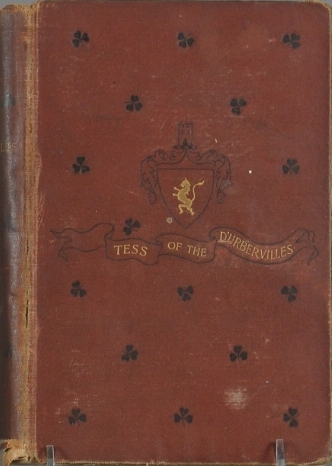
Having recently read Wuthering Heights, which is often heralded as a passionate triumph, and being somewhat disappointed, I was worried the same would happen when reading Tess of the d'Urbervilles by Thomas Hardy. However, Tess of the d'Urbervilles was brilliant. It was full of tragedy, tension and beautiful, descriptive writing. Even though there are many events that are deeply tragic and terrible, they are subtly and sensitively written.
Spoiler Warning!
Tess is a brilliant, virtuous character, the archetype of rural innocence. Although she may be seen as too-good-to-be-true and therefore an unrealistic portrayal of femininity, I think the way Hardy portrays her allows her to be both believable and loveable. Despite her constant pursuit of honesty and integrity, she constantly has to struggle against the evils of this world until her simple soul is finally and desperately crushed. You know from the offset she wasn't made for this world.
Alec d'Urberville may be the obvious villain of the story but some find Angel Clare a more detestable figure. It could be that Angel Clare was, at first, a potential source of happiness and hope for the wronged Tess, but he desperately lets her down. Also, Angel Clare never really has to suffer for his actions; Alec d'Urverville gets his comeuppance but Angel's failure not only remains unpunished but he has the chance to live a life of love and happiness: one that Tess couldn't. I feel, however, that Angel redeems himself at the end for enabling Tess to have a few days of true happiness and for not abandoning her when he could have done.
Hardy's writing style is really beautiful. He constantly forewarns the reader of upcoming tragedies, which adds to the horror of watching Tess innocently trying to conduct her life. Whilst she is at Talbothays Dairy, the reader has a conflicting sense of joy and hope at Tess's young love and the ominous feeling that it isn't going to last, which of course, it doesn't. When the forewarned tragedy does strike, it is never overwrought or melodramatic. Even outpouring of emotion seems justified by poor Tess, as her fate is just horrific. One example of a brilliantly crafted sentence that states the sorrow with superb simplicity is when Tess's child dies:
"So passed away Sorrow the Undesired—that intrusive creature, that bastard gift of shameless Nature, who respects not the social law; a waif to whom eternal Time had been a matter of days merely, who new not that such things as years and centuries ever were; to whom the cottage interior was the universe, the week's weather climate, new-born babyhood human existence, and the instinct to suck human knowledge."The whole section of the baby's baptism and death is just brilliant.
The ending, although good, was not what I expected. I always knew how Tess's life played out, but the section is Sandbourne was not how I imagined it. It was perhaps appropriate that Tess was taken away from her usual rural setting towards the end to show how she had no place in this increasingly urban and industrialised world. I was a bit disappointed that Tess had abandoned her sense of morality, but I suppose that was the point. I realised my expectations and hopes that Tess could yet have a life of purity and innocence were foolish; something Tess herself had already become resigned to.
Summary
Favourite character: Tess, obviously.
Least favourite character(s): Tess's parents, John and Joan Durbeyfield. They are constant sources of bad ideas and poor advice, being utterly useless in protecting Tess or providing her with any good prospects.
Favourite section: The baptism and death of sorrow.
Least favourite bit: Tess in Sandbourne.
Critical issues: Tess is too good and pure, something feminists may have a problem with; all the men are idiots; the issue of class and wealth.
Subscribe to:
Posts (Atom)