Showing posts with label Factual Friday. Show all posts

Friday, 9 July 2010

Factual Friday

Atacama DesertImage by Philip Morton via Flickr
With this weekend's weather set to be hot the Met Office has issued a health warning, as well as there being a housepipe ban in Cumbria, Greater Manchester, Lancashire and Merseyside. For advice on how to stay cool despite the high temperatures you can visit the NHS website.

In 2003 Europe found itself in the grips of a heatwave, killing over 30,000 people, nearly half of which were in France. Temperatures of over 40°C were recorded for more than seven days during July to August that summer. The UK was also affected, and record temperatures of 38.5°C were recorded in Kent.

The hottest temperature ever recorded on Earth was 57.7°C, and this was in Al'Aziziyah, Libya on 13 September 1922. This does not, however, make this the hottest place on Earth.

This title falls to Dallol, Ethiopia, which had an annual average of 34°C between 1960 and 1966.

The driest place on Earth is an area that have the somewhat unoriginal name of the Dry Valleys, in Antartica. This area has not seen rain for probably 5 million years. Second is the Atacama Desert, Chile (image above). If meat is left out in either of these places it is unlikely to rot. It will either freeze or dry out completely.

Enhanced by Zemanta

Friday, 2 July 2010

Factual Friday

This week's Factual Friday is dedicated to typography. This is because I have a bizarre obsession with the interrobang. The interrobang is a symbol that is a combination of a question mark and an exclamation mark and looks like this . If the name interrobang is not good enough for you (and who wouldn't it be good enough for‽ I mean, it sounds like something out of a comic strip), you can also call it a quesclamation mark. Despite its amazing names it hasn't gained popularity and the ?! is favoured. However, it was popular in the 1960s and it even found its way onto typewriter keyboards.

Another interesting, but more widely used, piece of punctuation is the asperand, also known as the at sign. The at sign, @, is not a recent phenonemon that appeared with the rise of the emails, as you would probably presume. It was used on keyboards as far back as the 1880s and the symbol was used for other purposes before that. An @ was found in a document from that land of Ikeas, Sweden in 1674 (image below). However, not even this is the first recorded usage.


In 1448, the @ symbol was being used in the Kingdom of Aragon.

In order to honour its rich and long history, I think that when giving out our emails we should say 'asperand' instead of 'at'. On that note, feel free to email me at bookwormsblog asperand gmail dot com.

Friday, 18 June 2010

Factual Friday

It is possible that on this day in 1178 five monks in Canterbury witnessed the formation of the Giordano Bruno lunar crater. They reported to their chronicler, Gervase, that they saw two horns of light coming from the shaded part of the moon. Theories suggest that when a meteorite hits the moon there would be plumes of molten rock, which may have been what the monks were describing. Also, the ray system (the bits blasted from the impact) is unfaded and the rim is still visible, suggesting it is quite recent. Well, less than 350 million years young. However, an impact of this size on the moon would have affects on Earth, but nothing of the sort was recorded in any civilisation at the time.

Earth has its own mysterious impact sites. One of these is found in Russia, and is known as the Tunguska event. It happened on 30th June, 1908 at thirteen minutes and thirty five seconds past midnight, Greenwich Mean Time. What is thought to have happened is that a meteorite or comet fragment exploded between 5-10km above the Earth's surface. The explosion felled about 80 million trees, over an area of 2150km². Although there is no crater, a lake may have been formed by a fragment of it.

These two events, although 730 years apart, may be linked. They both could have been caused by the Beta Taurid meteor shower that occurs during June and July each year. However, there's no point in trying to go out at night and observe them, because the meteors approach from the day time side so the sunlight renders them invisible.


However, if you want to see an astrological event the Comet McNaught is visible in the UK's sky at the moment. It will be at its brightest on June 22nd. Comet McNaught, or C/2009 R1 as about fifty comets are called 'Comet McNaught' (Mr McNaught keeps on finding the things), is not one that will be coming back, like Hale's Comet, so this is the only opportunity ever to see it. It's most likely to be spotted at dawn or dusk.

That is the end of another Factual Friday.

Friday, 11 June 2010

Factual Friday

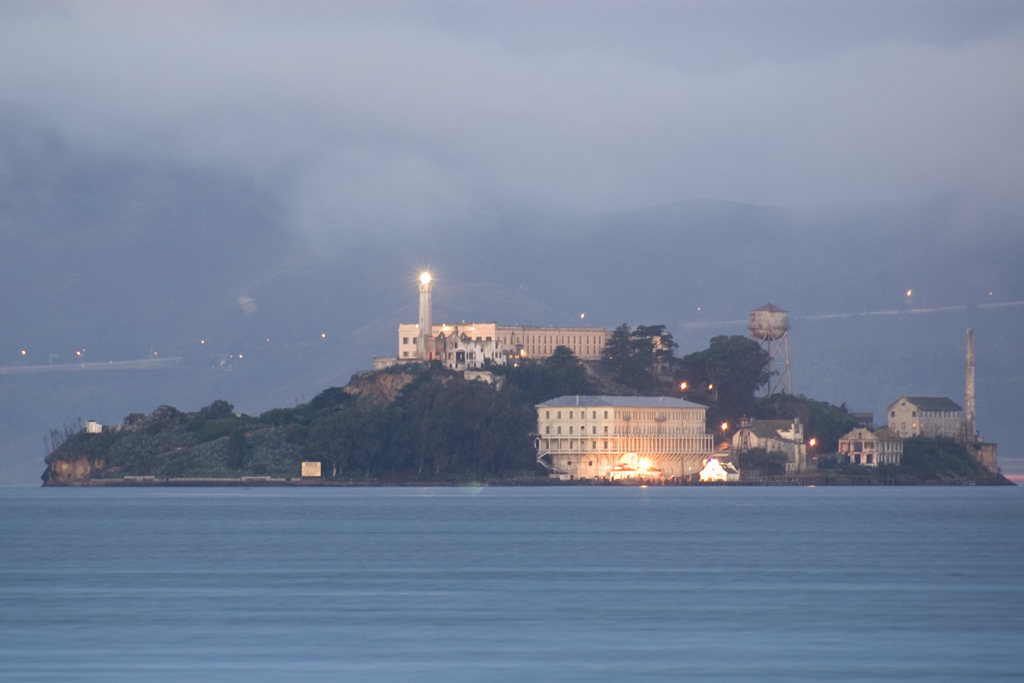
On this day in 1962, the most elaborate escape attempt from Alcatraz was made. Clarence and John Anglin; Frank Morris and Allen West began planning an elaborate escape by at least September 1961. Using ordinary objects they burrowed through the walls, finishing their escape route in May 1962. They constructed an inflatable raft from raincoats and made dummies out of papier-mâché, which they left in their beds during the attempt on July 11th, 1962. Allen West never took part in the actual escape because he didn't manage to remove the false wall he erected to hide the tunnel in time. By the time he had managed to the other three had taken the raft and gone. The whereabouts of the others are unknown, and they presumably drowned in San Francisco Bay. Therefore, it can still be maintained that there were no successful escapes from Alcatraz Island.

A more successful escape attempt was made by the famous womaniser, Casanova. He was housed in the famous jail adjacent to the Doge's Palace, Venice. Using a sharpened iron bar, he and a priest in the cell next door cut through the ceilings of their cells and made an escape over the roof.

Colditz was apparently 'escape-proof' but over three-hundred escape attempts were made, and over thirty managed to reach friendly territories.

This is only a small part of the long history of prison breaks. Wherever there are prisoners, there are also potential escapees.

Saturday, 5 June 2010

Factual Friday

Welcome to another 'Factual-Friday-but-actually-in-the-early-hours-of-Saturday-morning' post. It's always a bit of a challenge to do a Factual Friday and to make it interesting, but a bit random.

Yesterday I went to Thorpe Park so today's topic is roller coasters.  Be prepared to go on a speeding, swerving, spinning journey of rollercoaster trivia.

Obviously, as a logophile, I'm going to first look at the name 'roller coaster', but, this time, not in English. The French and Spanish name for rollercoaster give a hint to the roots of this form of 'entertainment'. In French, they are called montagnes russes and Spanish, montañas rusas, which both mean 'Russian Mountain'. Russian Mountains were winter sled rides that were constructed out of special made hills of ice. This idea took of and went through various stages until the complete loop track was finally born.

A lot of people think that rollercoasters are unsafe. Although some studies have claimed that the more extreme rides may cause brain damage in rare cases, or trigger previously undetected heart conditions, death or serious injury by rollercoasters is unlikely. Only one in  about 90 million guests to theme parks die, and often it is due to the negligence of the guest (i.e. jumping from a moving vehicle, climbing onto a track or going in prehibited areas) or a previous medical condition. When about one in a thousand die whilst riding horse in the US every year, it sort of puts it in perspective.

Kingda Ka, despite it's rubbish name, holds the record for being the tallest and the fastest ride and having the biggest drop in the world. The longest rollercoaster is Steel Dragon 2000, which is 2479m long. It was the Ultimate, in Yorkshire (which I have ridden on), and it is the only UK rollercoaster to rank in the top ten of anything rollercoaster wise.

Questions
  1. Do you like rollercoasters?
  2. Which is you favourite/ least favourite rollercoaster?
  3. What topic should I cover in my next 'Factual Friday'?

Friday, 28 May 2010

Factual Friday

I've got 23 minutes in which to complete this Factual Friday. This is made more difficult by the fact that I have hurt my wrist (I suspect a fracture but my self-diagnoses are not always accurate).

And what to write about. Well, I was just watching Friday Night with Jonathan Ross and one of the guest stars was Jeff Goldblum. And, it has to be said, he inspired me. Yes, he is an inspiration of mine. So what shall I write about? Geeks? Dinosaurs? Fictional Detectives? No. Premature Obituries.

On 25th July, 2009 (the same day Michael Jackson did actually die), a rumour started that Goldblum had fallen off a cliff in New Zealand and found his untimely end. Well, seeing as 10 months later I was watching a recent interview of him with Mr Ross I can guess it was not true.

Lots of people have been the victim of premature obituries. In fact, Wikipedia has a whole article about them. The victims include George W. Bush, Samuel Taylor Coleridge, Miley Cyrus, Ernest Hemmingway, as well as many, many others.

One of the most interesting, which Wikipedia dubs the CNN.com Incident, is where draft obitaries came to light on the news channel's website. It was noticed on 16 April 2003 that tributes for the likes of Fidel Castro, Dick Cheney, Nelson Mandela, Bob Hope, Gerald Ford, Pope John Paul II and Ronald Regan (four of which have subsequently died) could be read on the development area of the website. Many of them had been based on the Queen Mother's obituary, which accounts for Dick Cheney being the UK's favourite grandmother and the Pope's love of horse racing.

So, in the world of media: be careful; or you'll be dead before you know it.

Friday, 16 April 2010

Factual Friday

It's a Friday. So that means that a load of useless facts are on the way to screens near you. In front of you, in fact.

Rachael is down visiting me, so today we went on a drive to some of the places of interest in the New Forest. So that is the theme for today. The New Forest.

It is 571 square kilometres in total, comprising of:
  • 146 km² of broadleaved woodland;
  • 118 km² of heathland and grassland;
  • 33 km² of wet grassland;
  • and 84 km² of tree plantations.
The New Forest was made a royal forest by William I in c. 1079. Two of his sons died in the New Forest, Prince Richard (who was mauled by a stag) and William II. William II was shot by an arrow in a hunting accident and the Rufus Stone apparently marks the spot where he fell. Some say these events were a result of the actions of William I when making the the forest his personal hunting ground.

Other things the New Forest is famous for:
  • Ponies;
  • Ice Cream (particularly Beaulieu Ice Cream);
  • The Beaulieu Motor Museum;
  • Witches.
I've recently finished a book, which I need to review, also I need to talk about my travels to Spain and discuss the new Doctor. So these are all up and coming.

Saturday, 3 April 2010

Factual Friday...

Okay, okay, it's a day late. But what'ya gonna do? Today's theme is, of course...Doctor Who. What? You thought I was going to say Easter? Okay, okay, I'll do an Easter one tomorrow.
  1. The first episode was shown on November 23rd, 1963
  2. It originally ran for 26 seasons before it was dropped.
  3. The reason why the TARDIS is stuck as a police box is because the chameleon circuit is broken. Donna Noble, in the episode Journey's End, revealed that the circuit can be fixed (by hotwiring the fragment links with the binary...)
  4. The TARDIS's windows are actually the wrong size for a police box. This is mentioned in the episode Blink.
  5. The Doctor is approximately 906 years old.
  6. The Daleks were introduced in December 1963
  7. The Doctor and his companions were 'responsible' for a lot of works of literature. Donna Noble gave Agatha Christie the idea for Miss Marple and Murder on the Orient Express, and the Doctor gave Shakespeare the name of a (never seen) character in The Tempest, Sycorax, as well as famous lines of his works such as 'The play's a thing'.

It is less than seven hours now until the big moment!

Friday, 26 March 2010

Factual Friday

I haven't blogged in a while. I know, I know. That makes me a bad person. If there was a list of bad people, I'd be on there somewhere between Gengis Khan and King Herod. So I'm going to make it up to you. I don't know how but I will.

One way is to start a 'Factual Friday'. That is where, once a week, I write about some random thing. It can be of a theme of your choosing. It could be on something topical. But I will write it. Hold me to it. Nag me. Throw bananas at me if you want to. I don't know why you would, but whatever floats your boat.

This week I'm going to talk about monkeys. Why, you may ask? Because I am going to a zoo tomorrow and I've been really excited about seeing the monkeys. There are 264 known species of monkeys in the world, and they can range from the pygmy marmoset, which is only 14-16cm long and weighs an impressive 140g; to the Madrill that are nearly 1m long and weigh in at 35kg.

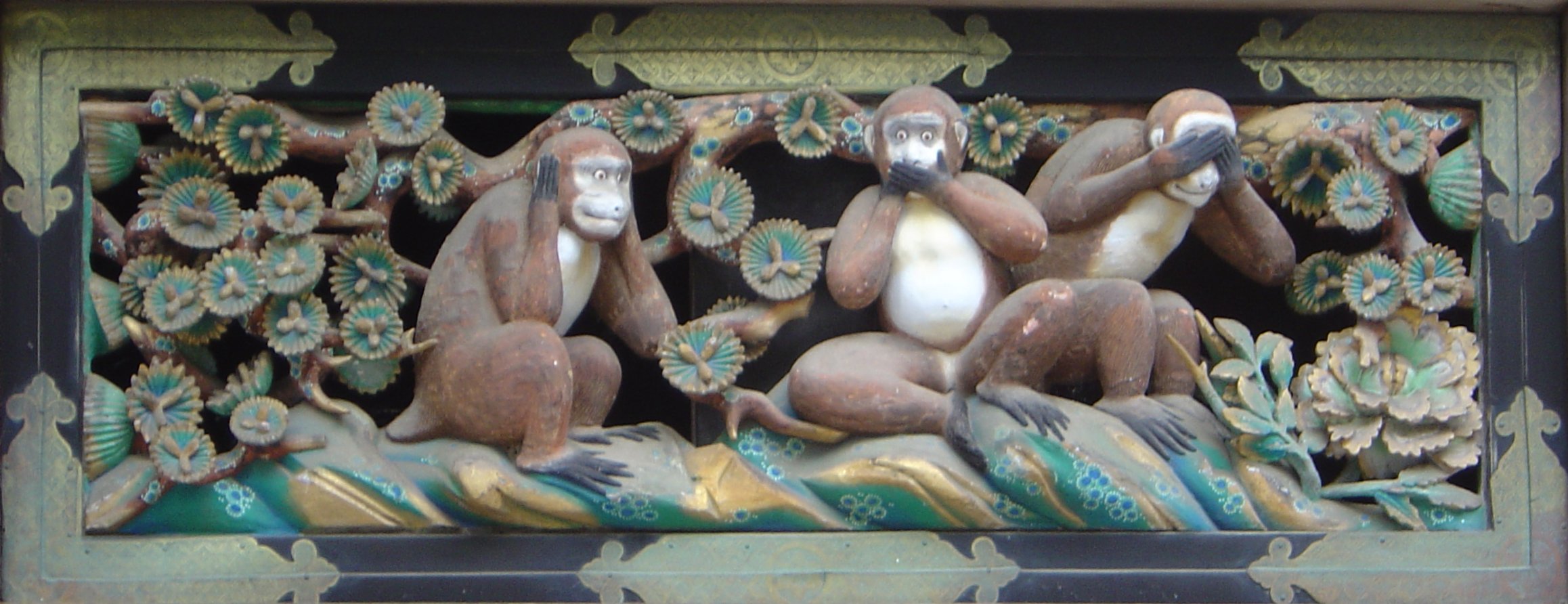
Famous monkeys include Katie, who played Marcel in Friends, the various monkeys that have gone into space (including Gordo who sadly lost his life), and the famous Three Wise Monkeys.